


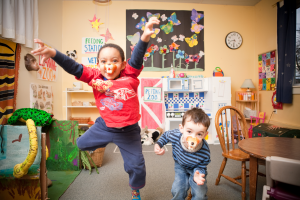
Why is dramatic play important for children? Why encourage make believe? Why is having a nicely stocked dress up trunk with costumes and props more than just a fun and fantastic idea for any house with young children and every pre-school classroom? Let’s dig into these questions here today… and find out why dramatic play is important!
First we’ll look at the question “What Is Dramatic Play?”, then we’ll talk about “Benefits of Dramatic Play”, and finally we’ll look at what kinds of resources help encourage dramatic play!
What Is Dramatic Play?
EarlychildhoodNEWS.com author Marie E. Cecchini writes the following about Dramatic Play, and I think it’s the best definition I’ve seen yet:
Dramatic play can be defined as a type of play where children accept and assign roles, and then act them out. It is a time when they break through the walls of reality, pretend to be someone or something different from themselves, and dramatize situations and actions to go along with the roles they have chosen to play. (Full article HERE.)
 Dramatic play can be defined as a type of play where children accept and assign roles, and then act them out. It is a time when they break through the walls of reality, pretend to be someone or something different from themselves, and dramatize situations and actions to go along with the roles they have chosen to play. (Full article
 Dramatic play can look like many different things! There’s no one defining way for your kids to “do dramatic play”. It can, but doesn’t have to, include role playing real or make-believe personalities, dressing up and playing with props and costumes, assuming different names, ethnicities, genders, ages, and more… but it always means FUN, and always includes some form of pretending.




 If you have a 4 year old in the house, you know it can be difficult to find things to keep him or her entertained. Frustrating even, at times.